
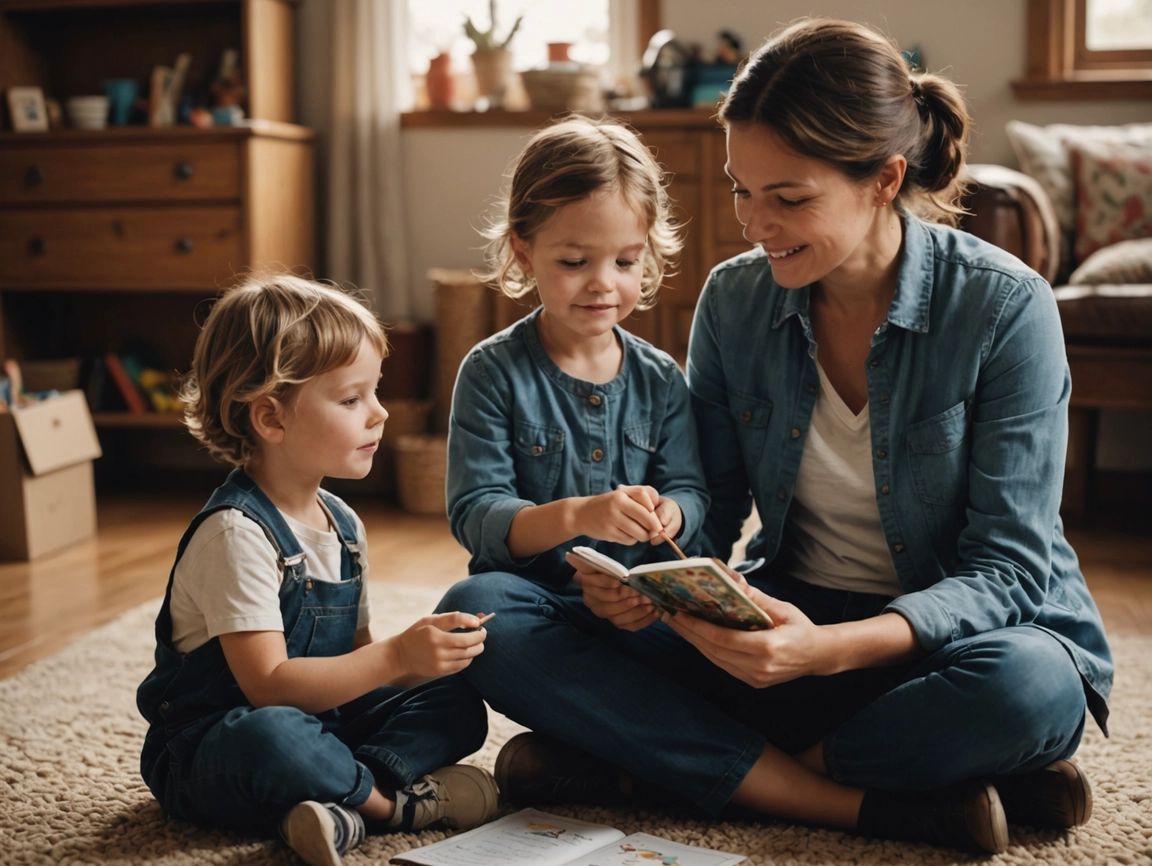
Our minds are our most powerful resource. We have often heard it said: ‘what the mind can conceive we can achieve.’ We also know that the environment a child grows up in makes up 80% of who they will turn out to be as young adults. Physiology and DNA are only responsible for 20% of a young adults’ attitude and behaviour. Adult attitudes and behaviours are driven by the mind, our most powerful resource. Therefore, your child may look like you in every way however, if he is raised by another family, in another part of the world or even in your city, your child will be ‘programmed’ with the attitudes and behaviours of that family’s culture and values. When you bring your brand new baby home from the hospital, it is a little like bringing home a brand new computer from Makro. You will have to set up that computer, by installing the programmes you want on the computer. A similar thing happens when you bring a newborn baby home. You will start programming the baby with your attitudes, beliefs, moral and values. This learning takes place naturally through the things you do and say, also what and who you expose your child to. Day mothers, schools, friends and family will all add to this programming over time. It is therefore very important that we carefully discern who and what we expose our children to. Whatever they learn consciously, will become deeply embedded in their subconscious. The subconscious mind is the storage cabinet for all learnt behaviour and this storage cabinet can be accessed at any time. Mental Functioning can be divided into: Conscious functioning which is deliberate and Subconscious functioning, which is automatic. Conscious functioning uses our 5 senses to determine the reality of what is happening. We have control over this and participate in the learning. Sub-conscious functioning is automatic, we don’t control it. What this means is that everything happening around your child, whether it be conversations or experiences, are recorded and stored in the subconscious mind. This is why the subconscious mind can be likened to a filing cabinet, where files can be retrieved at any time. The important thing to remember here is that the files in the subconscious mind’s filing cabinet are retrieved automatically by the brain, it is not a deliberate process. In other words, we have little control over it. Think about a dejavu experience; sometimes something feels familiar, but consciously you don’t remember ever doing or seeing it before. Chances are you had an experience in early childhood that the conscious mind can’t remember, but the subconscious mind is recalling it. The conscious mind does not have perfect memory, but the subconscious mind has 100% perfect recall. What does this mean for our children? It is important to expose the children to good and healthy age-appropriate experiences, because this is what they will learn and store in the mind’s filing cabinet. If a child is constantly, harshly ridiculed, he will grow up angry and aggressive. If he is guided gently and with love, he will grow up with kindness and respect. The study therefore implies: Garbage into the subconscious mind… Garbage out. Good into the subconscious mind… Good out. Therefore coming back to the environment a child is placed in and the fact that it contributes 80% of who he will become as a young adult is very important. An example is: A child who is constantly being forced to eat his food and ridiculed for not finishing his meal may be told; ‘Finish all your dinner, children are starving out there.’ This child could grow up to have a bad relationship with food. In his sub- conscious filing cabinet, there is a file on eating. As an adult, he may overeat because his subconscious mind is recalling the childhood message of, we don’t waste food. Another example is a child who is constantly labelled as naughty, that child will eventually live up to that label because it’s what has been programmed in his sub– subconscious mind. This is why it is important to choose the language we use with our children. For example, at Cedar Crest we never use the word naughty, we are very aware of not wanting that word to be recorded in their subconscious minds. Instead, we turn it around and say, ‘you are a good boy, good boys don’t bite their friends, let’s say sorry and do this rather…’ The message the child is getting and recording sub-consciously is… I am a good boy and he will live up to that label. As adults, if we reflect on some of our behaviours today, we will most likely be able to link it back to childhood lessons. This is why it is of utmost importance to ensure that what our children are exposed to, will contribute positively to their ‘ programming’. It does take a village to raise a child. By 6 years old your child will have 50% of the attitudes and behaviours that he will operate of as a young adult. By 12 years old they will have 80%. Children between birth and 6 years old are like sponges and will learn more than they will in the rest of their lives. Good, bad or nasty. In the words of Haim Ginott: Children are like wet cement. Whatever falls on them makes an impression. If we can focus on positive inputs at a young age, we will do a lot to ensure that our children grow up to be emotionally well- adjusted adults. The opposite is an angry, unhappy adult who feels misplaced and negative, thriving on other people’s misery. This adult will have to do a lot of work, to undo negative childhood lessons. We don’t want this for our children. This is a big topic and there is so much more information available. The takeaway message, for now, is that it is important to expose our children to wholesome experiences and
Food to fuel our children
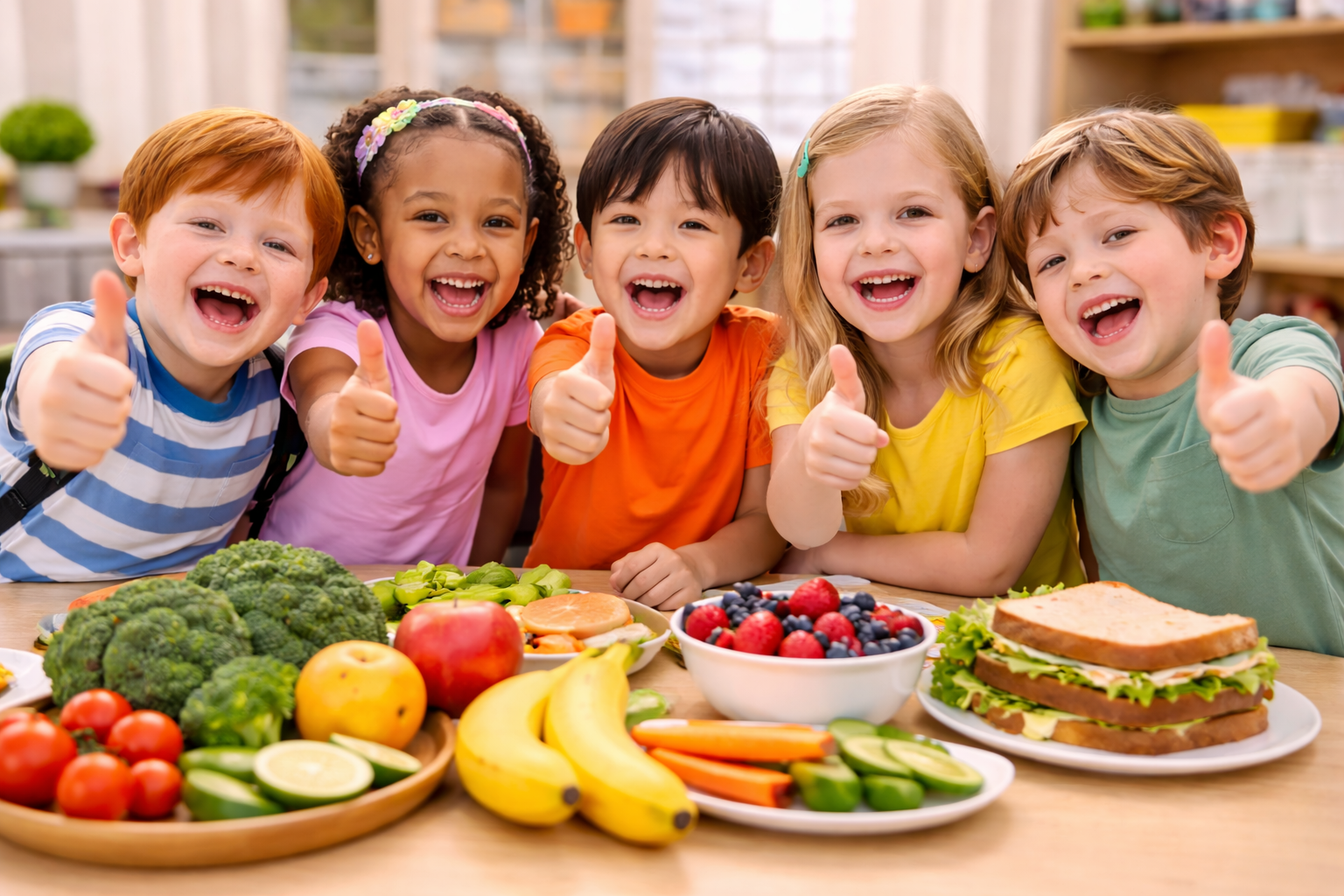
We hear this question almost every day: what should I do if my child refuses to eat healthy foods? Some children refuse to eat certain food groups, some refuse to eat anything at all and some eat everything in sight and come close to scraping the pattern off the plate. We have seen children that somehow survive on rice alone for years and some on crackers and nothing else. Then there are those parents who are blessed with happy eaters who will always finish their food and be willing to try new foods without any fussing. We know that food is the fuel that keeps our little ones moving and helps them grow big and strong. The problem parents face today, is not only dealing with mealtime battles but also establishing healthy eating habits and good nutrition. You may wonder why it is important at such a young age to establish healthy eating habits when the child has his whole life ahead of him to establish a healthy diet. The earlier, the better. Scientific research has shown that the sooner you introduce your toddler to a balanced healthy diet, the more success you will have at establishing lifelong patterns of healthy eating. On the flip side, we are constantly reminded that childhood obesity is on the rise. Obese children usually turn into obese adults and they are more likely to develop lifestyle illnesses as adults. We need to instil good habits in our children by setting a good example of healthy eating. There is no use in telling our children the importance of healthy eating and then at snack time, the teacher sits at her table eating a fat cream doughnut while the kids snack on cucumber sticks. The same applies at home as well. Children learn what they live and then they live what they learn. From a young age, we should offer our toddlers a balanced diet. This includes all the food groups and it means not eating too much of one particular food group. It also means not eliminating any major food group. The child who just eats rice and no protein or veg will eventually be deficient in something as they are not taking in all the nutrients they need for overall health. Finding the balance can be very frustrating for parents. When you offer foods that keep being refused, it is easy to just offer hot chips with tomato sauce and think… “Well, at least he is eating something.” Don’t give up, persevere and continue to invent new balanced recipes. Generally toddlers and pre-schoolers like flavour. There is a belief out there that children like bland food. We have found that the most popular meals at school are the ones with a depth of flavour, using herbs, garlic and spices to make meals interesting. There are ‘baby weaning’ cookbooks out there that suggest that babies starting to eat solids, can be offered mild curries and other flavourful recipes. Keeping it interesting can be beneficial. When looking at a balanced diet it’s important to: Provide the child with plenty of complex carbohydrates, e.g., wholegrain pasta’s, cereals and bread, and fibre-rich foods such as fruit, vegetables, and legumes. Provide a moderate amount of lean meat, fish, nuts or nut products like nut butters and dairy. (Provided the child can tolerate dairy. Some children who suffer from sinuses, asthma or eczema benefit greatly from a dairy-free diet) The following is important to keep in mind when looking at a balanced diet: Children need full cream yoghurt, cheese and milk. The low-fat variety is usually much higher in sugar which is very inflammatory and feeds viruses. A good idea is to mash up some fresh fruit like strawberries, banana or blueberries and stir it through full cream Greek yoghurt. Let it sit in the fridge overnight and it can be enjoyed as a healthy low sugar fruit yoghurt at school the next day. Allow very small amounts of fried foods, sugar, sweet drinks; even juice, cakes, honey etc… This should be an occasional treat, not an everyday addition. Healthy Choices: Knowing what makes up a healthy diet is the first step in deciding what your child should eat. The next step is harder i.e. putting this knowledge into practice. Shopping should not find you reading all the labels and spending hours doing the grocery run every week. The principle of eating fresh whole foods is a good start. Try and eliminate anything processed as these foods are high in bad fats, sugar and salt. Don’t be fooled by the excellent marketing of certain foods i.e. Veggie puffs and veggie biscuits. These are still processed and should form part of an occasional treat. Fresh veg, fruit and full cream yoghurts are what should be offered daily. Since we promote a high fibre diet, plenty of water should be offered to prevent constipation. The real truth is to give your child whole foods that have not been fiddled with too much. The fiddling causes the food to be over-processed and this is where we find many nasties hiding. An example of this is a sugar-coated cereal that claims to be fortified with minerals and vitamins. Steer away from these as it is just an overload of bad fats and sugar. Staying healthy is not that hard. Marketers have just made unhealthy foods look so attractive. It is our jobs to take healthy foods and make them look attractive to the child. Toddlerdom is the time to get your child hooked on a healthy diet. He is still too young to follow the flock who gravitate to the drive-through lane. As adults, we have this small window to influence their food choices for life. Often a toddler who has not been exposed to fast foods and a high sugar diet will prefer fresh healthier foods and refuse the bad stuff because their palettes have been developed for fresh clean eating. It does take more effort as the bad stuff is so